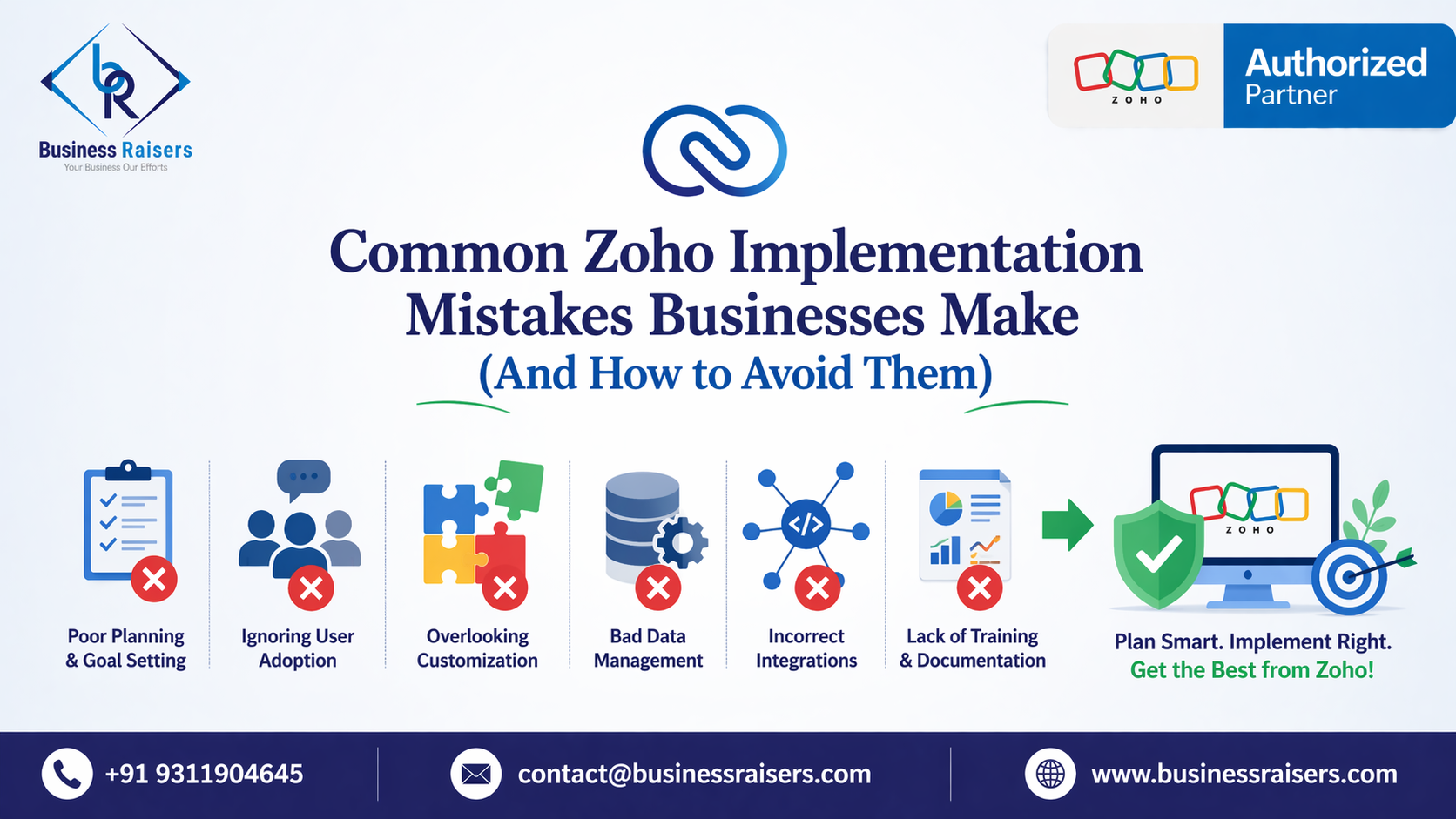
Common Zoho Implementation Mistakes Businesses Make (And How to Avoid Them)
Zoho offers a powerful suite of business applications that can streamline operations, improve productivity, and support growth. However, the success of any Zoho system depends heavily on how it is implemented.
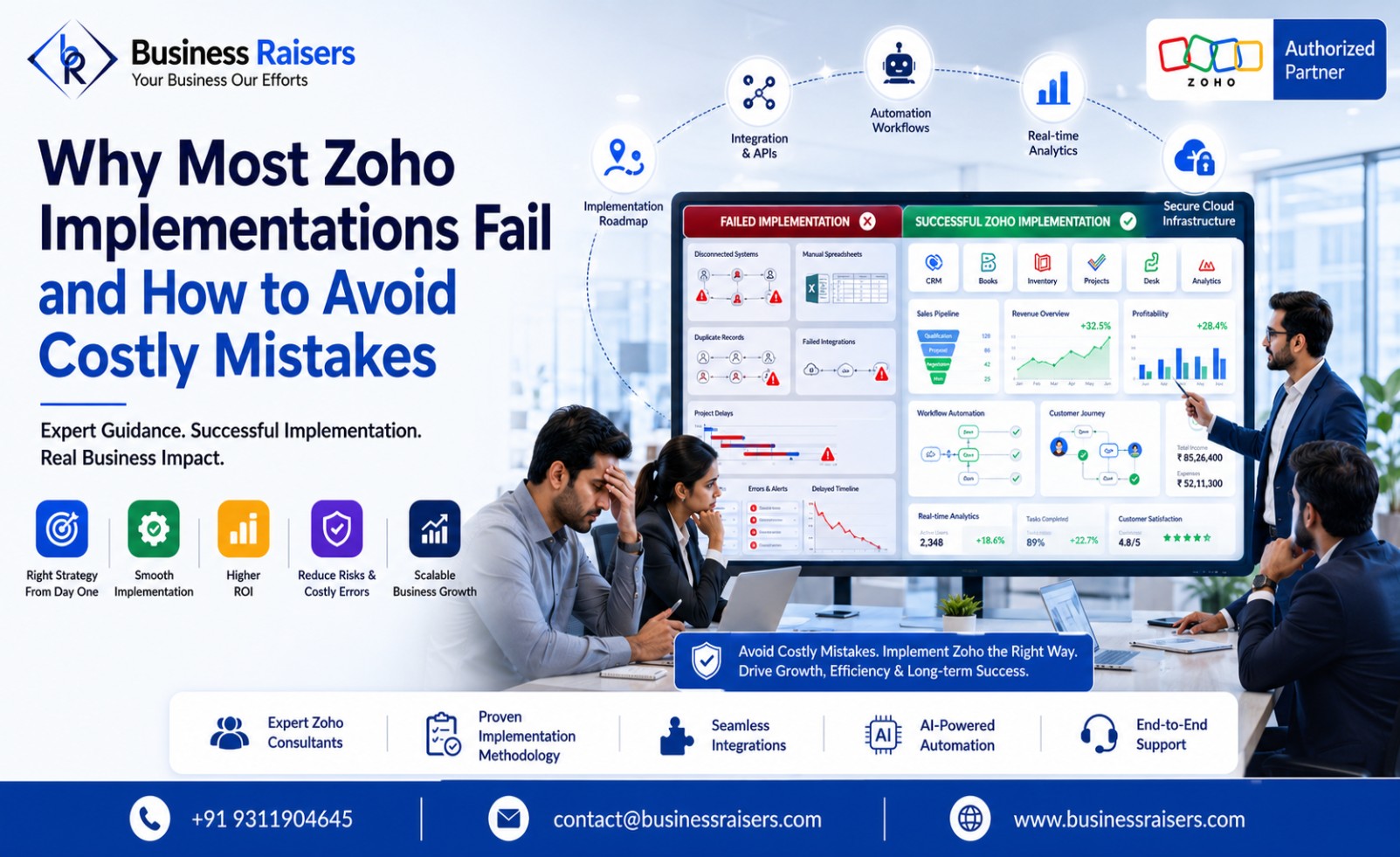
Many businesses invest in Zoho but fail to achieve the expected results due to poor implementation strategies. Mistakes made during the setup phase can lead to inefficiencies, data issues, and low user adoption.
In this blog, we will explore the most common Zoho implementation mistakes businesses make and how you can avoid them to ensure a smooth and successful deployment.
Lack of Proper Planning and Requirement Analysis
One of the most common mistakes businesses make is starting implementation without a clear plan. Without understanding business requirements, the system may not align with actual workflows.
Proper planning helps define objectives, identify key processes, and ensure that Zoho applications are configured correctly. Skipping this step often leads to confusion and inefficiencies later.
Common Issues:
- Undefined business goals
- Poor workflow mapping
- Incorrect module setup
To avoid this, businesses should begin with a structured approach and often rely on expert Zoho consulting services to analyze requirements and create a proper implementation strategy.
Choosing the Wrong Zoho Applications
Zoho offers multiple applications such as CRM, Books, Desk, People, and Zoho One. Selecting the wrong combination of tools can create inefficiencies instead of solving problems.
Businesses often choose tools based on assumptions rather than actual needs, which leads to underutilization of features.
Common Issues:
- Using unnecessary applications
- Missing critical tools
- Poor system integration
Working with a Zoho implementation consultant ensures that the right applications are selected based on business goals and processes.
Poor Data Migration and Management
Data migration is one of the most critical steps in Zoho implementation. Many businesses fail to clean or structure their data before migrating it into the new system.
This results in duplicate records, inaccurate data, and reporting issues.
Common Issues:
- Duplicate or incomplete data
- Incorrect data mapping
- Loss of important information
To avoid these problems, businesses should use structured Zoho implementation services and ensure proper data validation before migration.
Ignoring Customization Needs
Every business has unique workflows, and a standard Zoho setup may not meet all requirements. Ignoring customization can limit the system’s effectiveness.
Customization allows businesses to tailor modules, workflows, and automation according to their needs.
Common Issues:
- Rigid workflows
- Limited automation
- Inefficient processes
Using professional Zoho customization services helps businesses create a system that aligns with their operations and improves productivity.
Lack of Integration Between Systems
Zoho applications are most effective when integrated with other tools such as accounting software, e-commerce platforms, and marketing systems.
Many businesses fail to integrate their systems properly, leading to manual work and data silos.
Common Issues:
- Disconnected systems
- Manual data entry
- Inefficient workflows
With expert Zoho integration services, businesses can connect CRM, accounting, and other applications to create a unified system.
Insufficient User Training and Adoption
Even the best system will fail if users are not trained properly. Many businesses overlook the importance of training during implementation.
This results in low adoption rates and inefficient use of the system.
Common Issues:
- Lack of user knowledge
- Resistance to new systems
- Incorrect usage of features
Proper training and support, often provided through Zoho consulting services, ensure that teams can use the system effectively.
Overcomplicating the Implementation
Some businesses try to implement too many features and workflows at once. This can make the system complex and difficult to manage.
A phased approach is often more effective for successful implementation.
Common Issues:
- Complex workflows
- Difficult user experience
- Increased errors
Working with an experienced zoho crm certified consultant helps simplify the process and focus on essential features first.
Not Using the Full Zoho Ecosystem
Zoho offers a complete ecosystem including CRM, Books, Desk, People, and Zoho One. Many businesses fail to leverage these integrations fully.
Using multiple disconnected tools instead of the Zoho ecosystem reduces efficiency.
Missed Opportunities:
- Zoho Books implementation for accounting
- Zoho Desk consultant for customer support
- Zoho People implementation for HR
- Zoho One consultants for unified operations
Businesses can also benefit from guidance from a Zoho ERP consultant to build a fully integrated business system.
No Post-Implementation Support and Optimization
Implementation is not a one-time process. Without ongoing support, systems may become outdated or inefficient over time.
Businesses often fail to monitor performance and optimize workflows after deployment.
Common Issues:
- Outdated workflows
- Performance inefficiencies
- Lack of system updates
Ongoing support through Zoho consulting services ensures continuous improvement and long-term success.
How to Avoid These Zoho Implementation Mistakes
Avoiding these mistakes requires a structured and strategic approach to implementation.
Best Practices:
- Start with detailed requirement analysis
- Choose the right Zoho applications
- Ensure clean and accurate data migration
- Customize workflows based on business needs
- Integrate systems for seamless operations
- Provide proper training to users
- Monitor and optimize continuously
With the right strategy and expert support, businesses can maximize the benefits of Zoho and achieve better results.
Conclusion
Zoho implementation can transform business operations, but only when done correctly. Common mistakes such as poor planning, lack of customization, and improper integration can limit the effectiveness of the system.
By understanding these challenges and taking proactive steps to avoid them, businesses can ensure a smooth and successful implementation.
With the help of experienced professionals, Zoho can become a powerful tool for improving efficiency, automation, and growth.
FAQs
1. What are the most common Zoho implementation mistakes?
The most common mistakes include lack of planning, poor data migration, ignoring customization, and not integrating systems properly. These issues can lead to inefficiencies and reduced performance.
2. Why is Zoho implementation important for businesses?
Zoho implementation ensures that the system is configured according to business needs. A proper setup improves efficiency, automation, and overall productivity.
3. How can businesses avoid Zoho implementation errors?
Businesses can avoid errors by planning properly, choosing the right tools, ensuring clean data migration, and working with experienced consultants.
4. Do I need a consultant for Zoho implementation?
While basic implementation can be done independently, working with a Zoho implementation consultant ensures better configuration, customization, and long-term performance.
5. How long does Zoho implementation take?
Implementation time depends on business requirements but typically ranges from a few days to several weeks.
6. What happens after Zoho implementation is completed?
After implementation, businesses should focus on training, monitoring performance, and optimizing workflows to ensure long-term success.