How Real Estate Companies Use Zoho CRM to Close 3X More Leads in 2026
The real estate industry is evolving rapidly, and companies that fail to modernize their sales processes risk losing valuable opportunities. In 2026, successful property businesses are leveraging advanced CRM technology to manage inquiries, streamline communication, and improve customer experiences. Many organizations are partnering with a Zoho Partner in Delhi to build a centralized system that helps sales teams respond faster, nurture prospects effectively, and close more deals.
With property buyers expecting instant responses and personalized interactions, managing leads through spreadsheets or disconnected tools is no longer practical. A modern CRM platform helps real estate companies stay organized, automate repetitive tasks, and maintain complete visibility across the sales pipeline.
Why Real Estate Businesses Need a CRM System
Real estate companies handle inquiries from multiple channels every day, including property portals, social media campaigns, websites, referrals, and direct calls. Without a structured process, leads can easily be overlooked, resulting in lost revenue and poor customer experiences.
A CRM system brings all lead information into a single platform, making it easier for sales teams to monitor interactions, schedule follow-ups, and track progress from the first inquiry to the final booking.
Key challenges solved by CRM include:
Missed follow-ups
Unorganized customer data
Slow response times
Lack of sales visibility
Inconsistent communication
Difficulty tracking property preferences
Centralized Lead Management
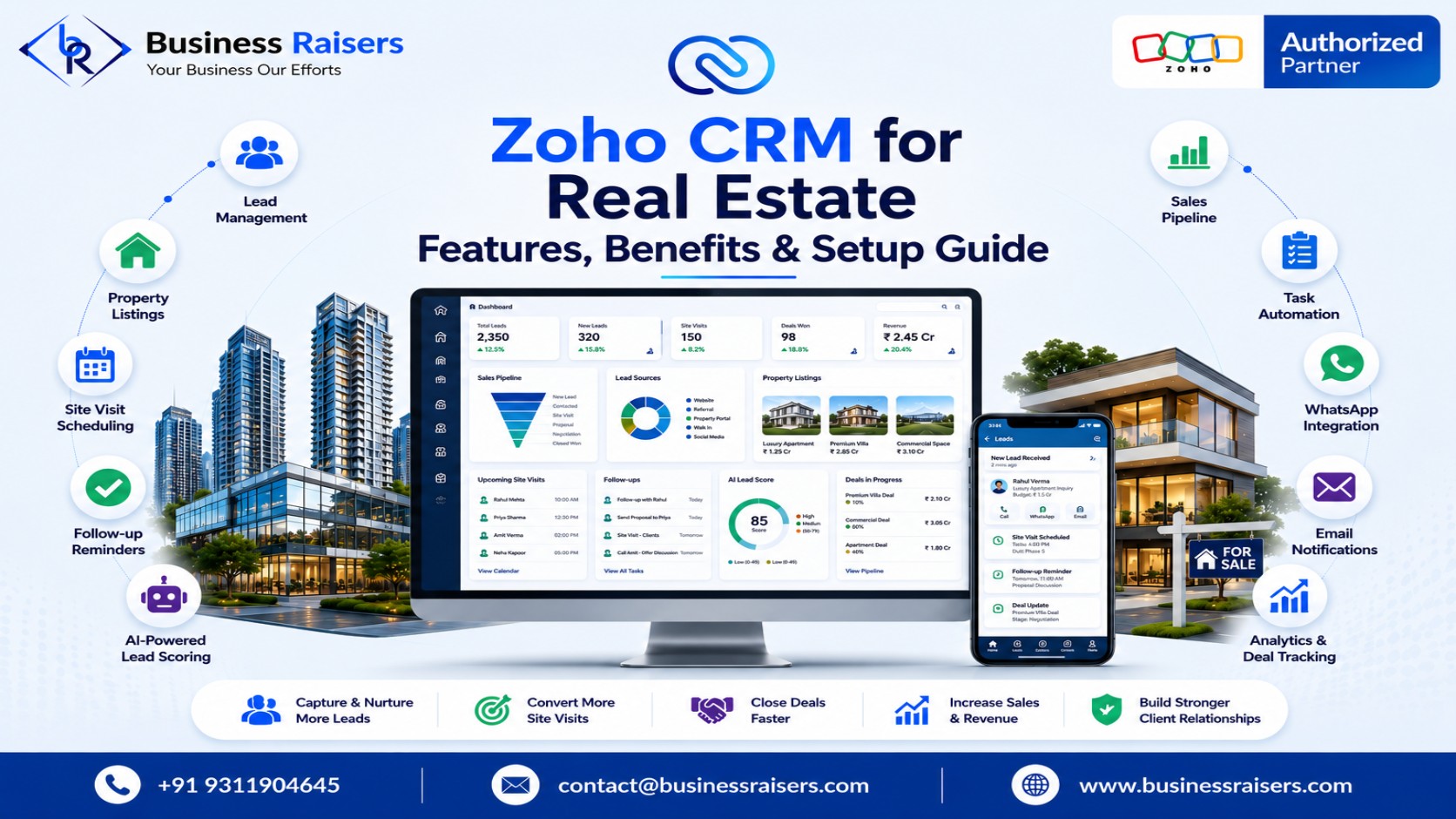
One of the biggest advantages of Zoho CRM is its ability to collect leads from multiple sources and store them in a single database. Whether inquiries come from websites, online advertisements, property listing platforms, or social media channels, every lead can be tracked and managed efficiently.
This centralized approach helps sales representatives quickly access customer details, communication history, property interests, and follow-up schedules without switching between multiple systems.
Benefits include:
Better lead visibility
Improved sales coordination
Faster response times
Reduced risk of lost opportunities
Enhanced customer experience
Automated Follow-Ups That Increase Conversions
In real estate, timing often determines whether a deal moves forward or is lost to a competitor. Prospective buyers frequently contact multiple agencies before making a decision. Responding quickly can significantly increase conversion rates.
CRM automation allows businesses to send:
Instant inquiry acknowledgments
Property recommendations
Appointment reminders
Site visit confirmations
Follow-up emails
Payment notifications
These automated workflows ensure every prospect receives timely communication while reducing manual effort for sales teams.
Smarter Sales with Lead Scoring
Not every inquiry has the same buying intent. Some prospects are actively searching for properties, while others may only be gathering information.
Lead scoring helps identify high-priority opportunities by evaluating factors such as:
Budget range
Property type preferences
Engagement level
Location interest
Interaction history
This enables sales professionals to focus their efforts on prospects who are most likely to convert, improving productivity and closing rates.
Unified Business Operations Through Connected Applications
Many real estate organizations use multiple software tools for sales, marketing, communication, and reporting. Managing separate platforms often creates data silos and operational inefficiencies.
A well-planned Zoho One implementation connects various business applications into a unified ecosystem. This allows teams to access accurate information across departments while improving collaboration and operational efficiency.
With integrated systems, businesses can:
Eliminate duplicate data entry
Improve workflow automation
Increase productivity
Generate accurate reports
Create a seamless customer journey
Better Client Communication Throughout the Buying Journey
Purchasing a property is a major financial decision that often requires multiple conversations and follow-ups. Consistent communication builds trust and keeps prospects engaged throughout the process.
Modern CRM platforms support communication through:
SMS
Phone calls
Appointment scheduling
WhatsApp messaging
Automated notifications
By maintaining a complete communication history, sales teams can provide more personalized interactions and stronger customer experiences.
Site Visit and Deal Tracking
Real estate transactions involve several stages before a property is booked or purchased. Tracking each step manually can become challenging as lead volume grows.
CRM systems simplify this process by helping teams manage:
Site visit scheduling
Property shortlisting
Customer preferences
Negotiation progress
Booking status
Payment milestones
This structured workflow enables managers to monitor sales performance and identify opportunities to improve conversion rates.
Data-Driven Decisions Through Advanced Reporting
Successful real estate companies rely on accurate data to make informed business decisions. CRM reporting tools provide valuable insights into sales activities and marketing performance.
Important reports include:
Lead source performance
Conversion rates
Sales pipeline analysis
Revenue forecasts
Team productivity metrics
Marketing campaign effectiveness
These insights help businesses optimize their strategies and allocate resources more effectively.
Expert Guidance for Maximum CRM Performance
Technology alone does not guarantee success. Proper configuration and customization are essential to ensure the platform aligns with business objectives.
Experienced zoho crm consultants help organizations design effective sales pipelines, configure automation workflows, implement reporting structures, and optimize user adoption across teams.
Their expertise enables businesses to maximize the value of their CRM investment while improving operational efficiency.
Tailored Solutions for Real Estate Workflows
Every real estate company operates differently. Standard CRM setups may not address unique requirements such as property inventory management, project tracking, or custom approval processes.
Professional Zoho customization services enable businesses to modify modules, workflows, dashboards, and automation rules to meet their specific needs. This creates a more efficient environment that supports business growth and improves user productivity.
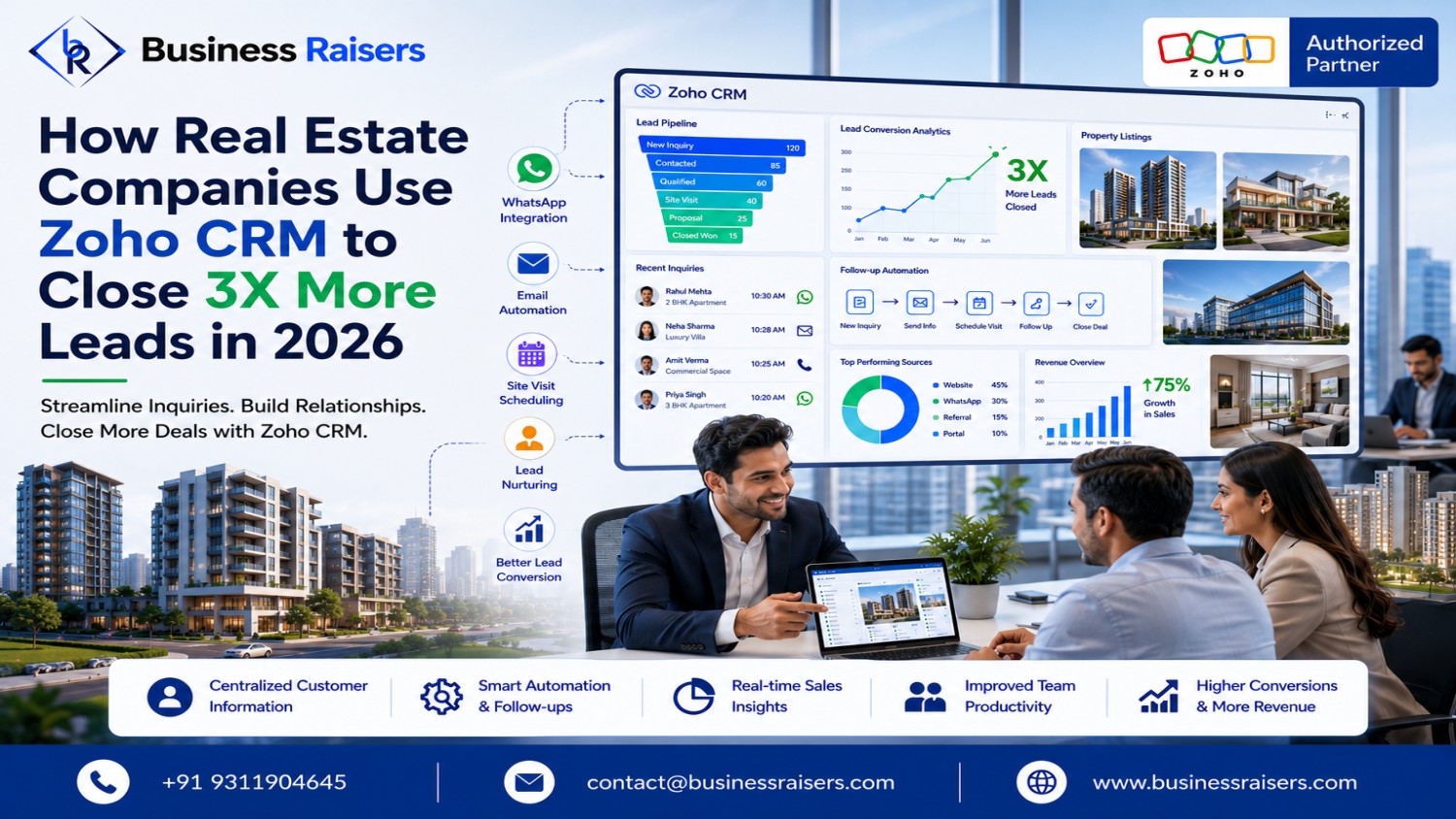
How Real Estate Companies Achieve 3X More Leads
Companies that successfully implement CRM automation often experience significant improvements in sales performance. Key benefits include:
Faster lead response times
Improved customer engagement
Consistent follow-ups
Better sales visibility
Increased team productivity
Reduced manual workload
Higher conversion rates
By combining automation, centralized data management, and personalized communication, real estate businesses can create a scalable sales system that drives long-term growth.
Conclusion
The real estate market in 2026 demands speed, efficiency, and exceptional customer experiences. Businesses that continue relying on manual processes may struggle to compete in an increasingly digital environment.
Zoho CRM helps real estate companies manage leads more effectively, automate critical sales activities, improve communication, and gain valuable business insights. When implemented strategically, it becomes a powerful growth engine that helps organizations convert more inquiries into successful property sales.
As competition continues to increase, investing in a modern CRM solution is no longer an option—it is a necessity for sustainable success.
Contact Business Raisers today for smart Zoho automation and business growth solutions.
FAQs
1. How does CRM help real estate companies increase sales?
CRM helps organize leads, automate follow-ups, and improve communication, leading to faster conversions.
2. Can Zoho CRM manage property listings?
Yes, it can be customized to track property types, locations, and buyer preferences efficiently.
3. Why is automation important in real estate CRM?
Automation reduces manual work and ensures no lead is missed or delayed in follow-ups.
4. How does CRM improve customer experience in real estate?
It provides fast responses, personalized communication, and better lead tracking for buyers.
5. What makes CRM better than spreadsheets for real estate?
CRM offers automation, analytics, integration, and real-time updates, which spreadsheets cannot provide.