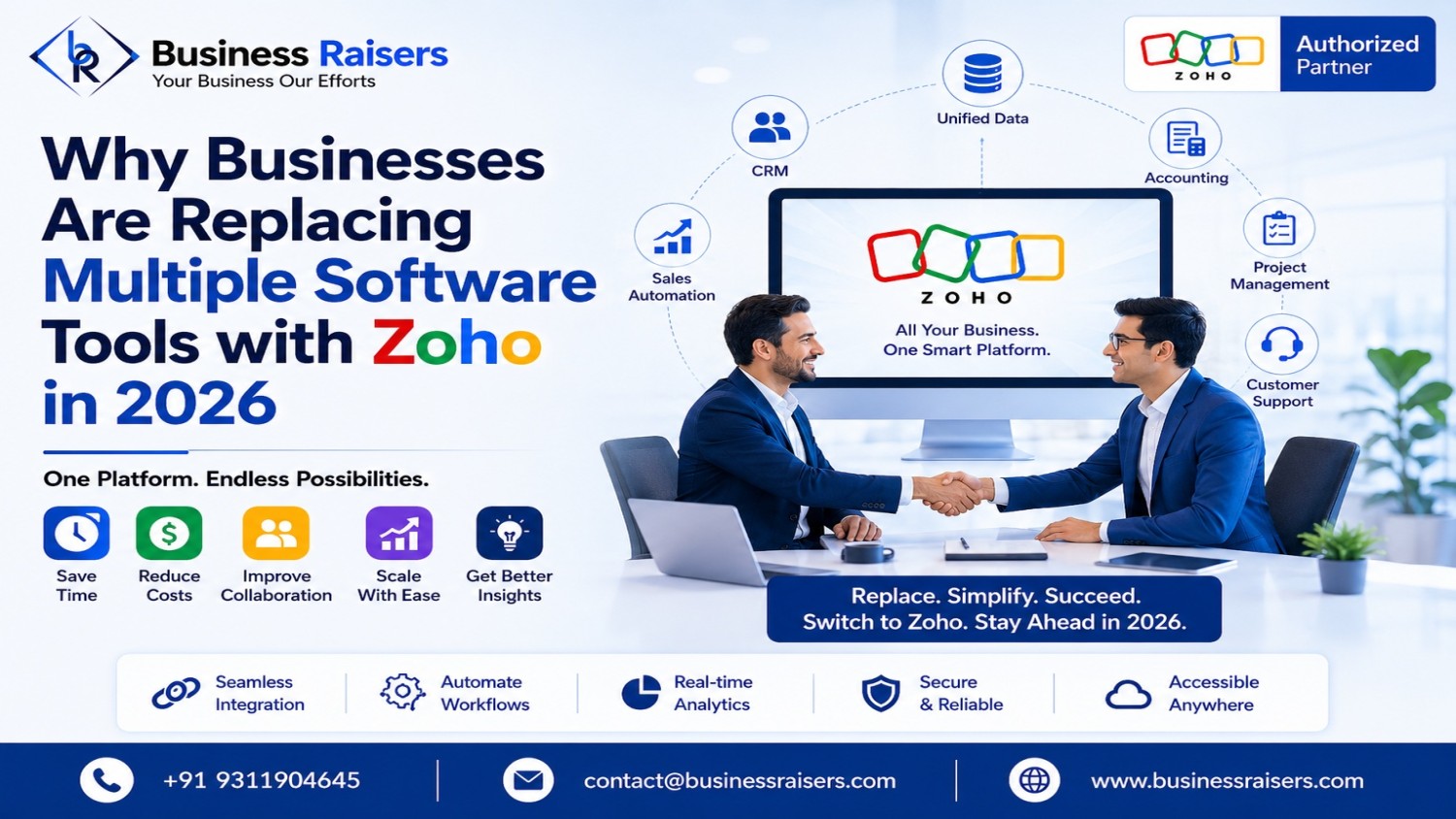
Why Businesses Are Replacing Multiple Software Tools with Zoho in 2026
Businesses in 2026 are facing increasing pressure to improve productivity, reduce operational costs, and manage customer experiences more efficiently. Many companies still rely on separate software applications for sales, accounting, customer support, inventory, HR, and reporting. While using multiple tools may seem manageable at first, it often creates long-term operational problems.
Employees waste time switching between systems, data becomes scattered across departments, and businesses struggle to maintain accurate reporting. Managing different subscriptions and integrations also increases operational expenses.
To solve these challenges, businesses are now moving toward unified business platforms like Zoho.
Zoho provides a complete ecosystem of cloud-based business applications that help companies centralize operations, automate workflows, improve collaboration, and make better business decisions from one platform.
At Business Raisers, we help organizations implement scalable Zoho solutions that simplify operations and support long-term business growth.
The Biggest Problems with Multiple Software Tools
Many organizations use one platform for CRM, another for accounting, a separate tool for customer support, and additional software for marketing or project management. Over time, this creates operational inefficiencies that directly impact productivity.
1. Data Is Stored in Different Systems
When software applications are disconnected, employees struggle to access real-time business information. Sales teams, finance departments, and support staff often work with incomplete or outdated data.
This lack of synchronization creates communication gaps and delays decision-making.
2. Operational Costs Increase
Every software platform comes with monthly or yearly subscription fees. Businesses also spend additional money on maintenance, integrations, staff training, and technical support.
Using multiple tools often means paying for overlapping features that could be managed through one centralized platform.
3. Manual Processes Reduce Productivity
Without automation, employees spend hours performing repetitive tasks such as:
Updating customer records
Creating invoices
Sending follow-up emails
Managing spreadsheets
Preparing reports
Tracking approvals
Manual processes increase human errors and reduce operational efficiency.
4. Reporting Becomes Complicated
Business reporting becomes difficult when information is stored across different systems. Companies struggle to generate accurate analytics because data is inconsistent or duplicated.
This affects strategic planning and business forecasting.
5. Poor Customer Experience
Modern customers expect fast communication and personalized service. When teams cannot access centralized customer data, response times become slower and customer satisfaction decreases.
Why Zoho Has Become a Preferred Business Platform
Zoho helps businesses solve these operational problems by offering an integrated ecosystem of applications that work together seamlessly.
Instead of managing multiple disconnected tools, businesses can operate from one centralized platform.
Key Benefits of Using Zoho
Centralized Business Operations
Zoho combines essential business functions into one ecosystem, including:
CRM
Accounting
Customer support
Inventory
HR management
Marketing automation
Reporting and analytics
Project management
This centralized approach improves efficiency and reduces complexity.
Better Workflow Automation
Automation is one of the biggest reasons businesses are adopting Zoho in 2026.
Zoho allows businesses to automate repetitive tasks such as:
Lead assignments
Follow-up reminders
Invoice generation
Approval workflows
Customer onboarding
Email notifications
Report creation
Automation saves time and allows employees to focus on high-value work.
Professional Zoho implementation services help businesses configure these workflows according to operational requirements.
Improved Collaboration Between Teams
Because all departments work within the same ecosystem, teams can access shared information in real time.
Sales teams can view customer invoices, support teams can track order history, and management can monitor business performance from centralized dashboards.
This improves communication and operational transparency.
Cost-Effective Business Management
Zoho reduces the need for multiple software subscriptions, helping businesses lower operational expenses while improving efficiency.
Businesses can scale operations without investing heavily in expensive enterprise software.
How Zoho CRM Improves Customer Management
Customer relationship management is critical for business growth.
Organize customer data
Track sales pipelines
Automate follow-ups
Monitor team performance
Improve lead conversion
Generate sales reports
A properly configured CRM system helps businesses improve customer engagement and increase sales productivity.
At Business Raisers, we help companies customize CRM workflows through expert Zoho implementation services.
Why Businesses Are Adopting Zoho Books
Accounting and finance management remain major operational challenges for growing businesses.
Many organizations still rely on manual bookkeeping or disconnected accounting tools that create reporting delays and financial inaccuracies.
Professional Zoho Books implementation helps businesses automate accounting operations and improve financial visibility.
Benefits of Zoho Books
Automated Financial Processes
Zoho Books automates:
Invoice creation
Expense tracking
Tax calculations
Payment reminders
Bank reconciliation
This reduces manual accounting work and improves efficiency.
Better Financial Reporting
Businesses can monitor:
Cash flow
Profit margins
Outstanding invoices
Expenses
Tax reports
Real-time financial visibility helps businesses make faster and smarter decisions.
Improved Accuracy
Automation minimizes accounting errors and improves compliance with tax regulations.
Importance of Business Integrations
Modern businesses often use external applications for e-commerce, payment processing, communication, and operations.
Without proper integrations, businesses face duplicate data entry and workflow inefficiencies.
Professional Zoho integration serviceshelp businesses connect third-party platforms with Zoho for smoother operations and better data synchronization.
Applications Commonly Integrated with Zoho
Businesses frequently integrate Zoho with:
Shopify
WooCommerce
Razorpay
PayPal
WhatsApp
ERP systems
Email marketing tools
Inventory software
These integrations improve operational efficiency and customer management.
Industries Using Zoho in 2026
Zoho is being adopted across multiple industries because of its flexibility and scalability.
Industries Benefiting from Zoho
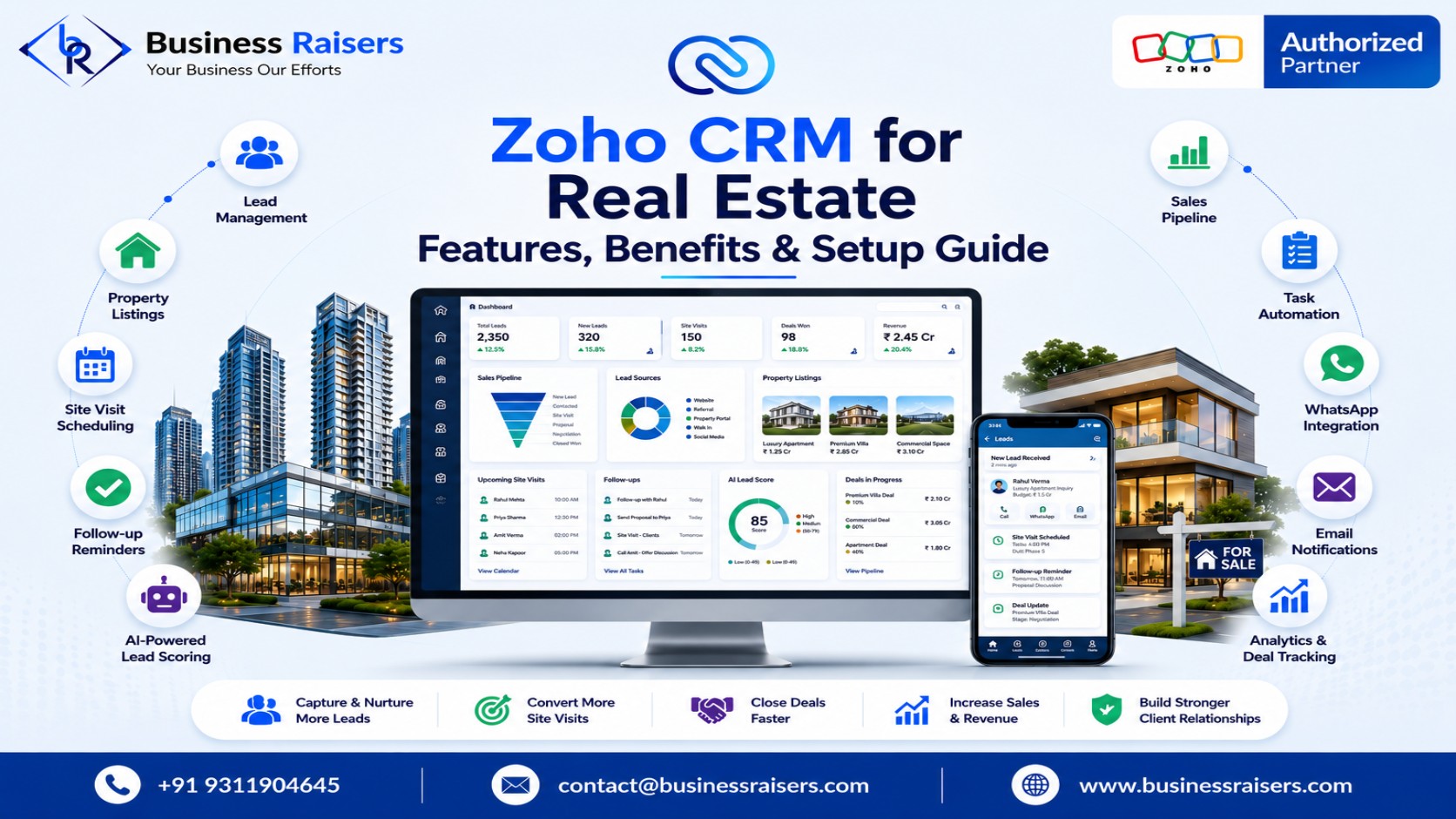
Real Estate
Lead tracking, property management, and customer communication.
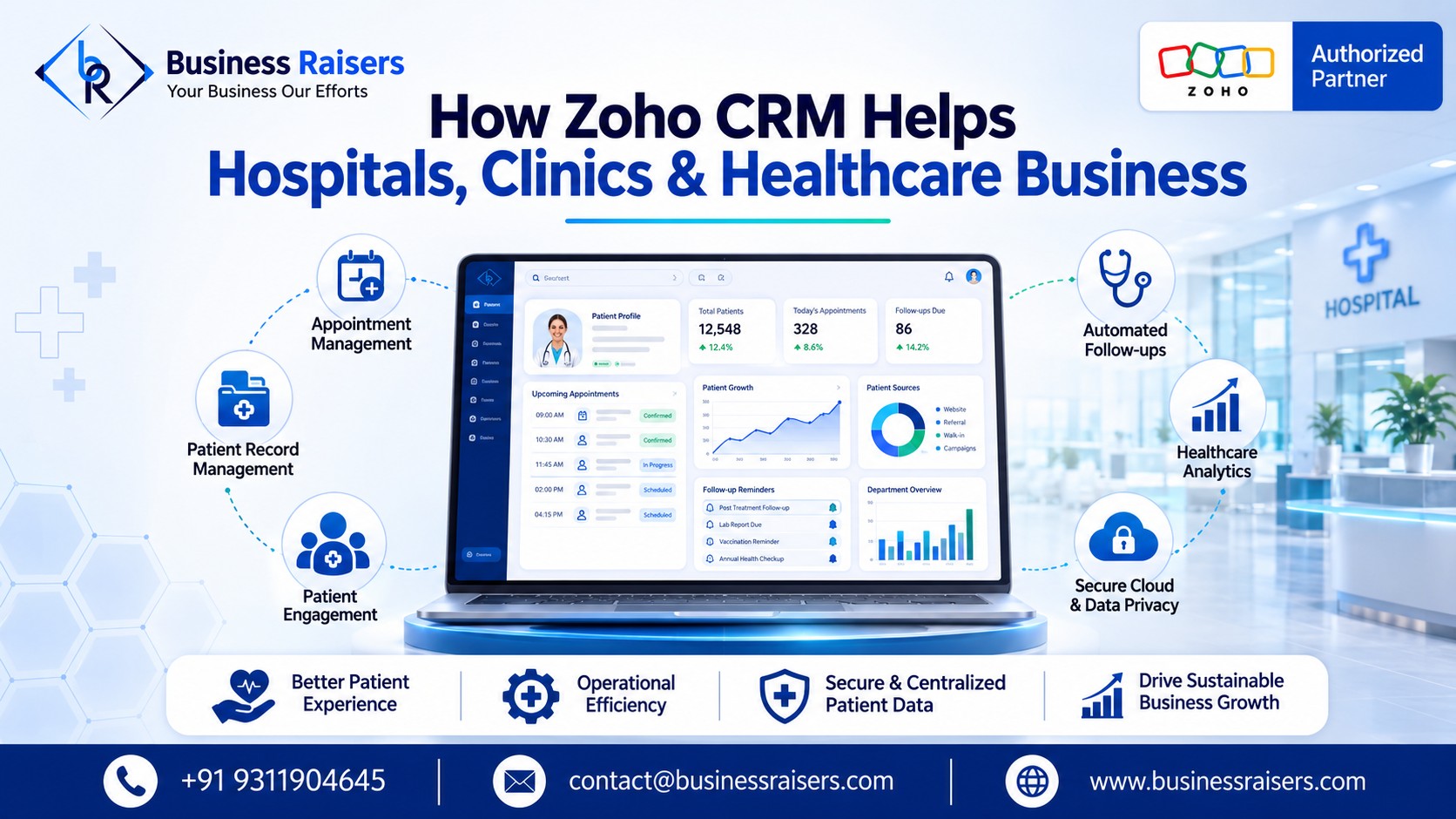
Healthcare
Patient management, billing, and appointment scheduling.
Manufacturing
Inventory tracking, production workflows, and supplier management.
E-commerce
Order management, customer support, and payment automation.
IT and Consulting
CRM management, project tracking, and invoicing.
Why Businesses Need Professional Zoho Experts
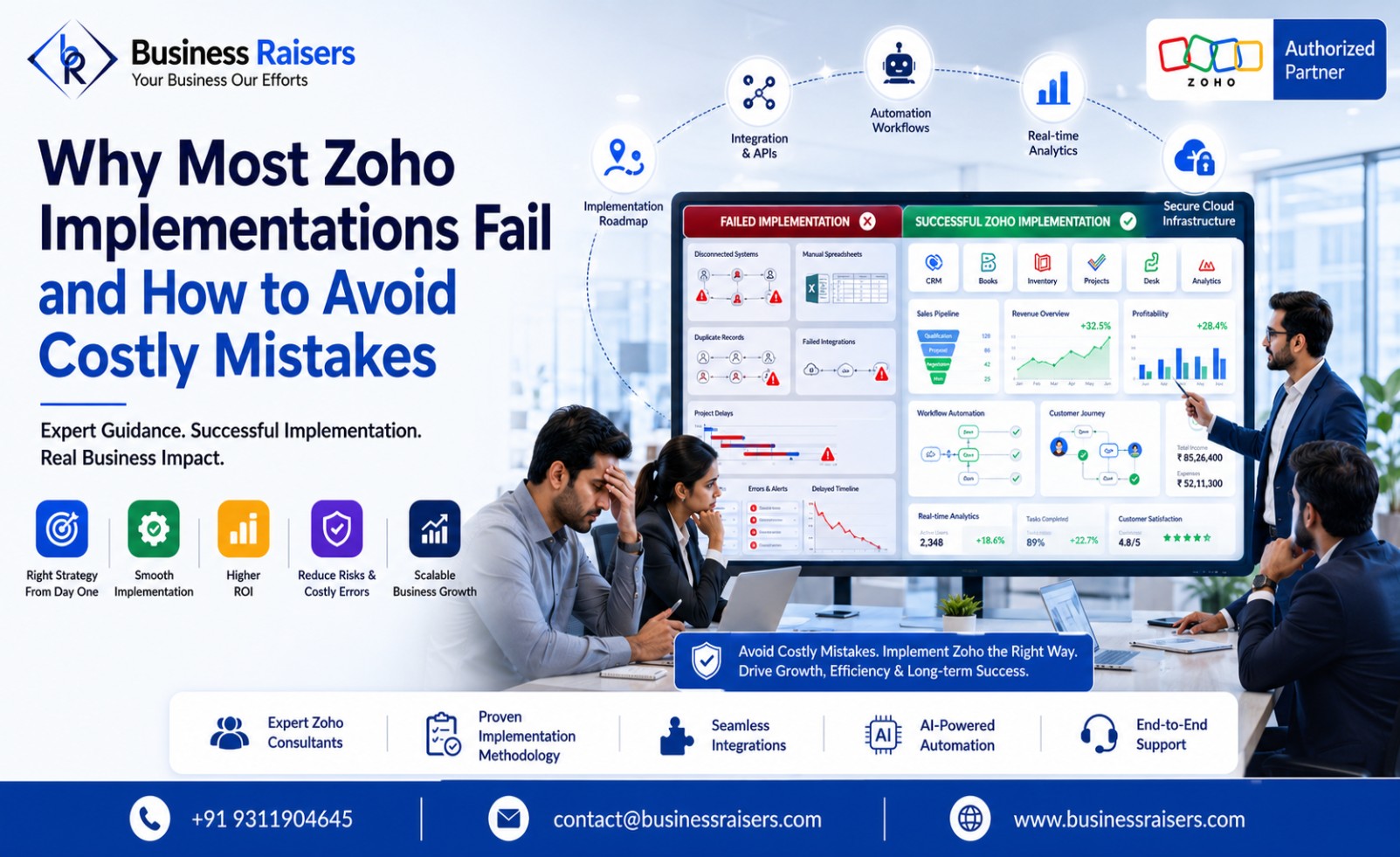
Many businesses fail to maximize software performance because of poor implementation strategies.
Successful implementation requires:
Workflow planning
Business analysis
Process automation
Customization
Integration expertise
At Business Raisers, we help businesses build scalable Zoho ecosystems tailored to operational requirements.
Why Choose Business Raisers
Business Raisers helps organizations improve operational efficiency through customized Zoho solutions.
Our expertise includes:
Zoho Books implementation
Zoho implementation services
Zoho integration services
Workflow automation
Zoho CRM customization
Business process optimization
We focus on helping businesses simplify operations, improve productivity, and support long-term digital growth.
Conclusion
Businesses are replacing multiple software tools with Zoho in 2026 because centralized platforms improve efficiency, automation, collaboration, and scalability.
Zoho helps organizations manage operations more effectively while reducing software complexity and operational costs.
With expert guidance from Business Raisers, businesses can successfully implement modern automation systems that improve productivity and support long-term business success.
FAQs
1. Why are businesses moving toward all-in-one software platforms in 2026?
Businesses are choosing centralized platforms because they reduce operational complexity, improve productivity, and enable teams to manage sales, finance, customer support, and reporting from a single system.
2. How does business automation help companies grow faster?
Automation reduces manual work, improves accuracy, saves time, and enables employees to focus on customer service, sales, and business growth rather than repetitive tasks.
3. What are the biggest problems with using multiple software tools?
Using different tools often creates data duplication, reporting issues, higher software costs, poor collaboration, and workflow inefficiencies across departments.
4. Why is cloud-based business software becoming more popular?
Cloud-based platforms offer better accessibility, real-time updates, improved security, remote collaboration, and lower maintenance costs compared to traditional software systems.
5. How can businesses improve operational efficiency in 2026?
Businesses can improve efficiency by centralizing operations, automating workflows, improving team collaboration, and using integrated business management platforms that simplify daily processes.